

How repetition becomes personal style
Wearing the same thing, deliberately, is how a uniform becomes a signature.
MODAME Journal ·
Novelty has been oversold
Modern fashion presents repetition as a failure of imagination. Newness is photographed, promoted and rewarded; the familiar is barely visible. Yet many people whose style appears most assured are repeating constantly. The same collar, trouser line, palette and shoe shape return in slightly altered arrangements. What looks effortless from a distance is often a narrow set of choices refined over years.
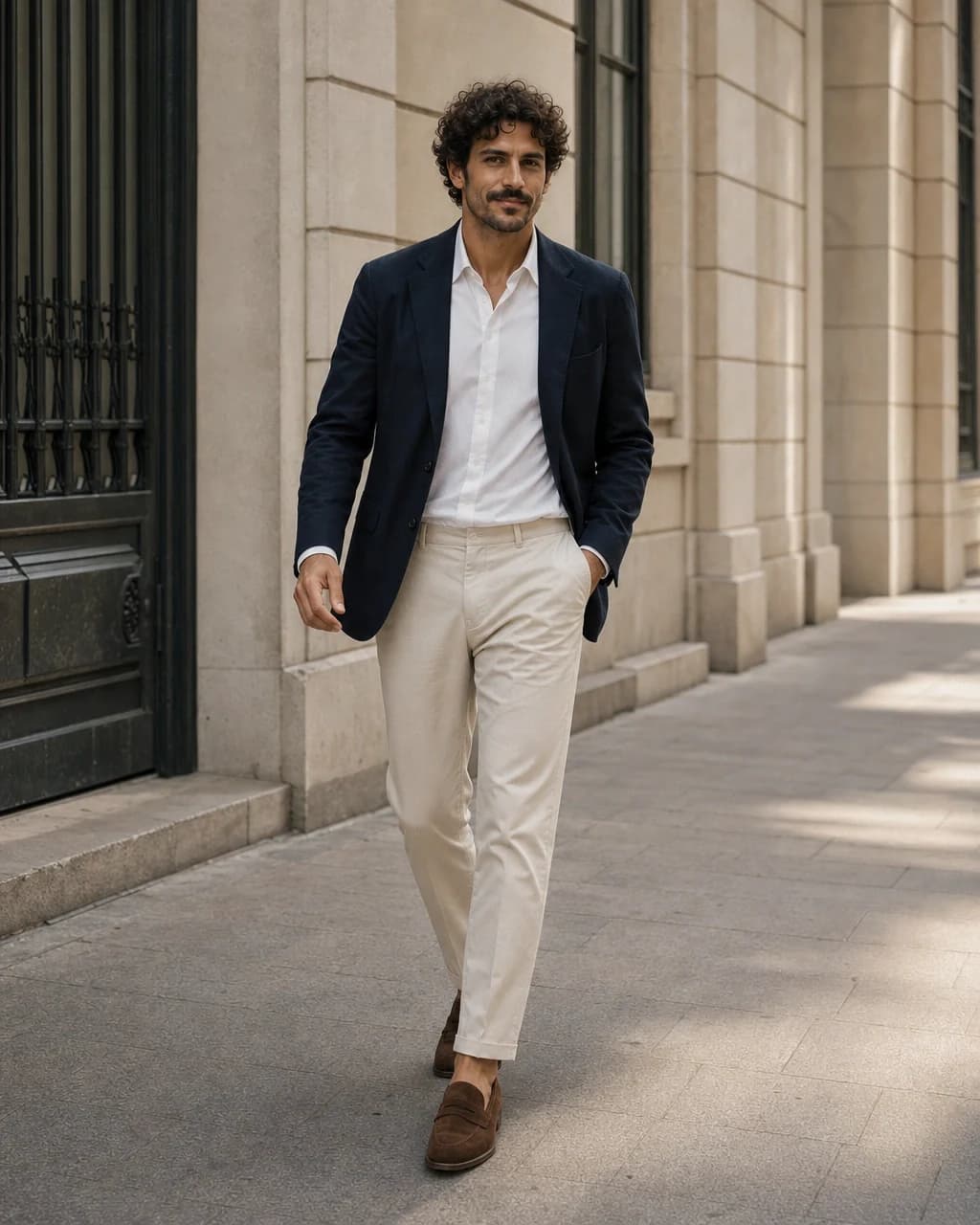
Repetition is how preference becomes legible. One navy jacket says little. A sustained attraction to navy outer layers, pale shirts and brown shoes begins to describe a point of view. The clothes need not be identical. Their relationships repeat: soft against structured, dark over light, generous trousers beneath a concise jacket. Personal style is found as much in these recurring agreements as in individual garments.
Accident or intention
Accidental repetition happens when habit goes unexamined. The same outfit appears because everything else creates friction, or because a neglected wardrobe has narrowed itself by default. Intentional repetition feels different. It recognises why the formula works and chooses the variables worth changing. A white tee, denim and overshirt might return with different textures, weights or shades according to season.
The distinction is attention. Intentional repetition can be adjusted rather than merely endured. If the silhouette feels too severe, the shirt becomes softer. If the palette feels flat, an olive layer or oxblood shoe enters. The underlying structure remains dependable while the expression changes. This is variation in the musical sense: the theme is present enough for the differences to matter.
The personal uniform
A personal uniform does not need to look uniform. It can be a repeated proportion rather than a fixed list: full trousers, a close knit and a longer coat. It can be a level of contrast, a preference for natural texture, or the habit of grounding every outfit with substantial shoes. These rules are often felt before they can be named.
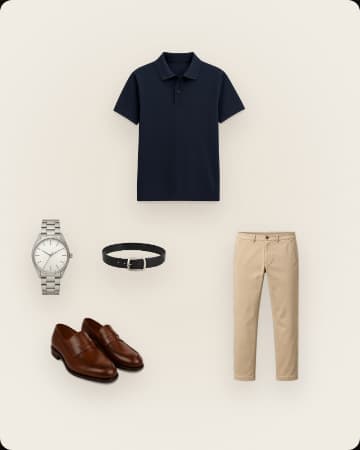
Familiar archetypes endure because they leave room for the wearer. A navy blazer, pale shirt and trousers can move from crisp to relaxed through cloth and fit. A knit polo with tailored trousers shifts with colour and footwear. Monochrome tailoring can be severe or gentle depending on texture. Linen separates can remain consistent while their looseness responds to heat. The formula is a framework, not a costume.
Repetition teaches discernment
Returning to a silhouette makes its finer details easier to see. The difference between two trouser rises becomes clear only after living with both. Repeating a jacket shape reveals whether another centimetre of length would improve balance. Familiarity sharpens judgement because fewer variables are changing at once. The wearer becomes sensitive to cut, cloth and proportion rather than distracted by novelty.
This is also how quality becomes meaningful. A fabric's hand, a seam's strength and a shoe's comfort reveal themselves through repeated wear. Clothing designed only for a first impression has nowhere to hide. The pieces that improve with familiarity earn trust, and trusted pieces become the reference against which future purchases are measured.
“Style becomes recognisable when preference is allowed to repeat long enough to become precise.”
The social fear of being seen twice
Anxiety about outfit repetition depends on an exaggerated idea of how closely other people are keeping score. Most remember an impression rather than an inventory: composed, relaxed, colourful, severe. Repeating a successful combination strengthens that impression. It may even create continuity, which is one reason uniforms have long carried authority.
The fear can be particularly strong around photographed occasions, where clothes appear to become permanent evidence. But a garment worn often is not exhausted by being seen. It acquires context. The linen suit at several summer dinners begins to belong to a life rather than a single image. The coat that returns each winter becomes recognisable in the best sense.
Variation without churn
A useful uniform creates a small number of stable positions: the trouser shape, the base layer, the outer layer, the shoe. Variation can then happen within a position. Three shirts with different collars can occupy the same role. A derby, loafer and clean trainer can alter formality without disturbing proportion. Texture can shift from flannel to linen while the palette remains familiar.
This approach makes experimentation more intelligent. A new piece has a known structure to test against. Instead of asking whether it is exciting in isolation, ask whether it introduces a worthwhile variation to an established formula. The result can still be surprising, but the surprise has somewhere to land.
A record of repeated choices
Personal style is sometimes described as something hidden that must be discovered. It may be more accurate to see it as a record of choices: what is worn, adjusted, saved, combined and returned to. That record changes, but it is richer than a quiz or a declared label. It contains the difference between what we admire and what makes us feel present.
To see the pattern, document a month of outfits without judgement. Look for recurring colours, silhouettes, layers and shoes. Notice which combinations survive different settings. Then repeat them on purpose, changing one element at a time. What emerges is not a restriction. It is a vocabulary, and fluency comes from using the same words well.
Seasonal repetition deserves attention as well. A summer uniform may be built from open shirts and relaxed trousers, while winter relies on roll-necks and long coats. They can still share a line, palette or attitude. Personal style is not weakened by responding to weather; it becomes more credible when the same sensibility can speak through different cloth.
Once the pattern is visible, shopping becomes editing rather than collecting. A new garment can deepen an existing theme, introduce a useful counterpoint or be declined without regret. The wardrobe no longer has to demonstrate range through quantity. Its range is shown by how many situations a small number of well-understood ideas can meet.