

Why a full wardrobe can still feel limiting
The arithmetic of having nothing to wear, and what it is actually about.
MODAME Journal ·
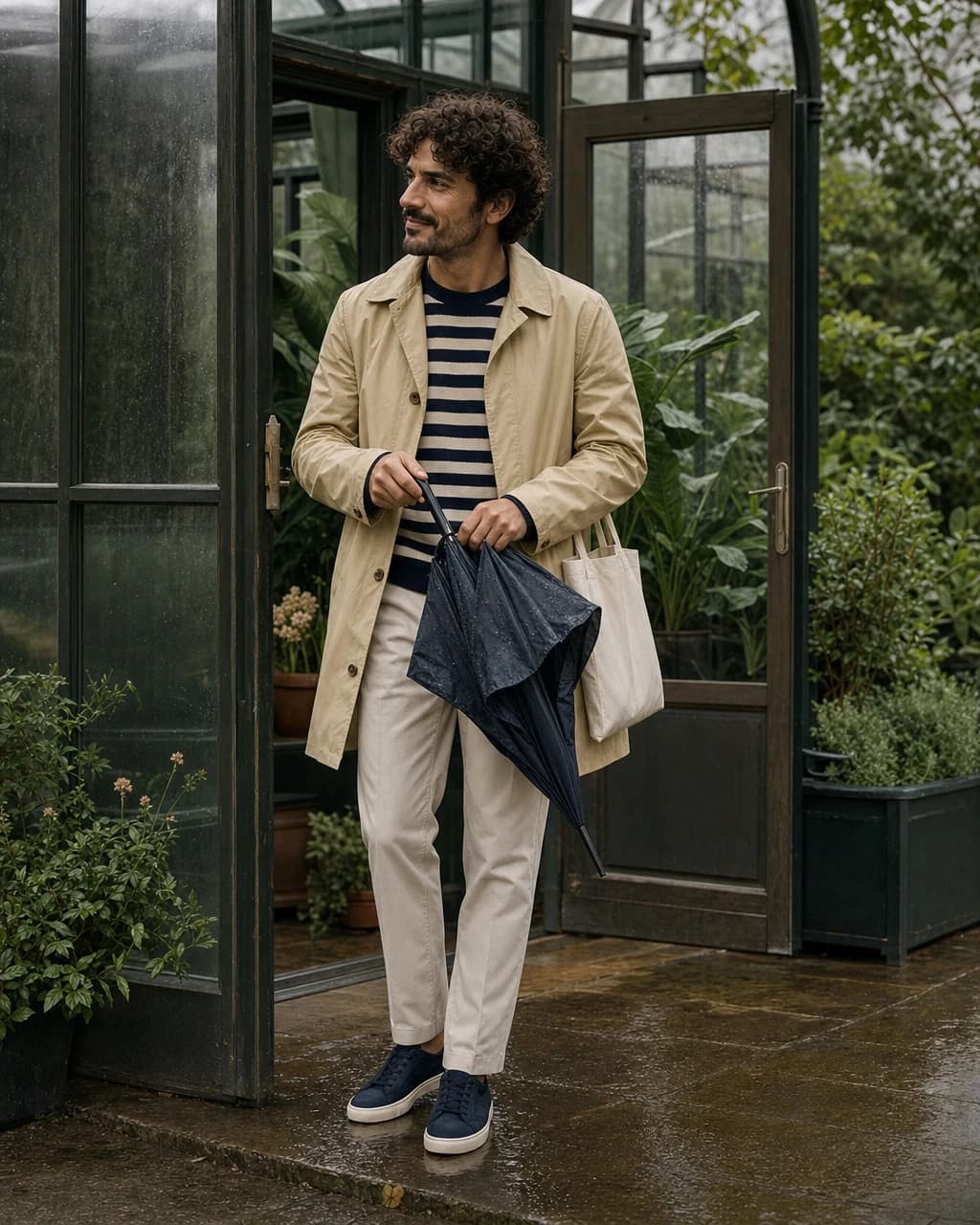
The wrong kind of abundance
A full wardrobe can feel like a library where every book is in a language you used to speak. The shelves are occupied, the evidence of choice is everywhere, yet nothing answers the immediate question. This is usually described as having nothing to wear, although the problem is rarely a literal absence of clothes. It is an absence of clear, believable combinations for the life being lived now.
Wardrobe size is easy to measure. Wardrobe usefulness is more elusive. A rail of thirty pieces that share a palette, level of formality and sense of proportion may support more real outfits than a room of unrelated purchases. Volume creates theoretical options; coherence creates practical ones. When those ideas are confused, accumulation begins to look like variety even as getting dressed becomes harder.
Clothes for former selves
Clothing is unusually good at preserving an earlier version of a person. There is the suit bought for an office no longer visited, the dress associated with a social life that changed, the severe jacket from a period when looking formidable mattered more than feeling at ease. None of these pieces is necessarily wrong. They simply belong to a context that no longer supplies enough occasions for them.
Because clothes can carry memory, price and aspiration at once, their presence is persuasive. We count them as options even when we would not choose them today. A wardrobe can therefore appear generous while its genuinely available portion is small. The useful question is not whether a garment still fits around the body, but whether it fits around the current week: its work, weather, movement, company and degree of attention.
The isolated purchase
Impulse purchases tend to arrive alone. They may be beautiful, flattering or precisely right for one imagined evening, but they have no established relationship with the rest of the wardrobe. Each demands a particular trouser, shoe or coat that is not there. The garment is owned, but the outfit remains unfinished. Enough isolated pieces create a wardrobe of beginnings rather than a wardrobe of answers.
Occasion-specific clothing has a similar effect. A dinner jacket, holiday shirt or dramatic shoe can be excellent within its narrow assignment, yet it should not be mistaken for everyday capacity. The imbalance appears when most of a wardrobe is made of exceptions. Ordinary mornings then depend on a thin group of dependable clothes, while a much larger group waits for circumstances that rarely arrive.
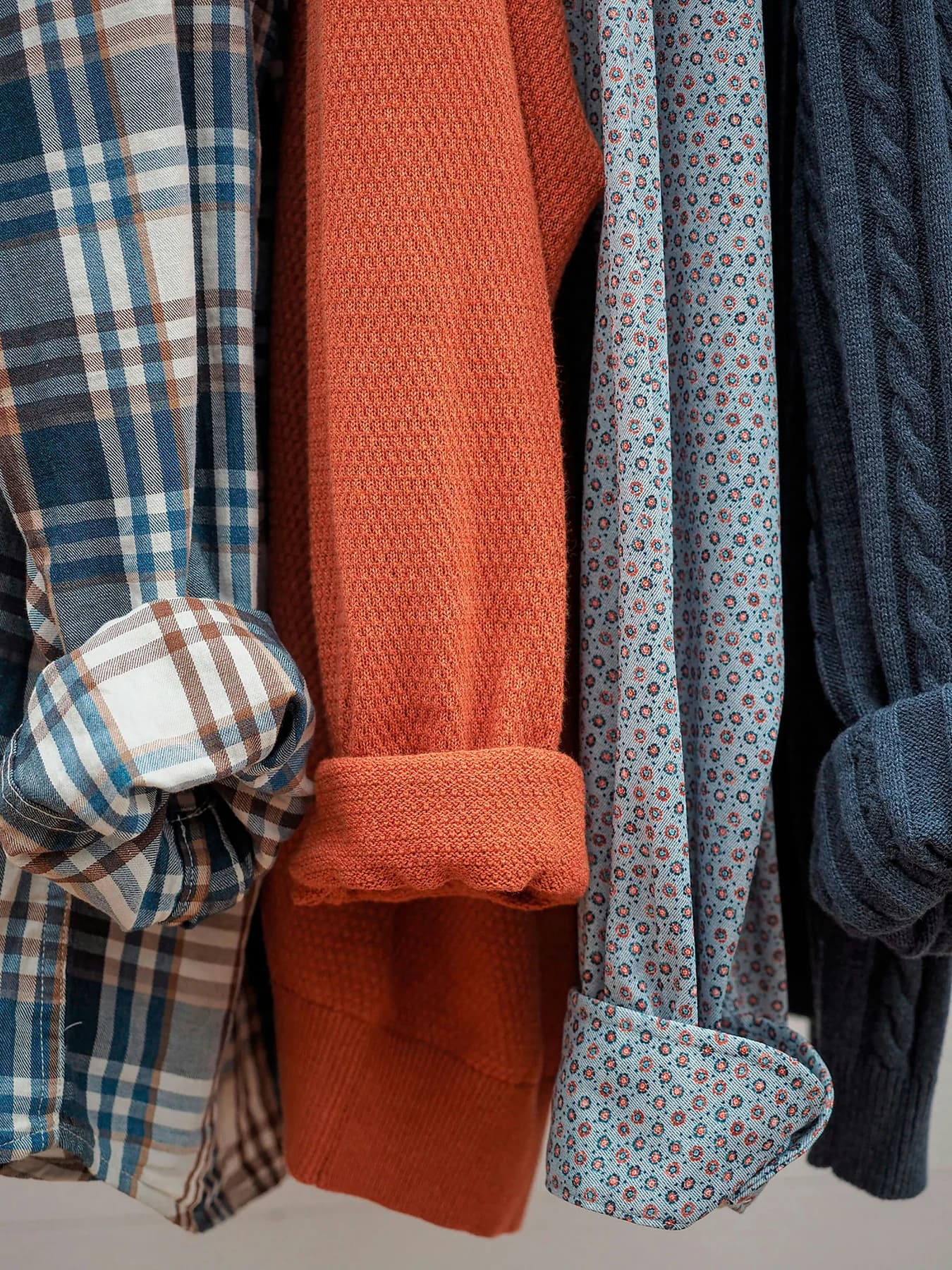
Duplication without versatility
Repetition is not automatically a problem. Five pale shirts can be the foundation of a coherent wardrobe if their collars, cloths and weights serve distinct purposes. Duplication becomes limiting when many pieces perform the same narrow role. Several nearly identical trousers may all require the same shoe and jacket, producing more inventory without producing more combinations.
This is why counting garments can mislead. A useful piece does not merely add one option; it connects existing options. A soft navy overshirt might work with denim, tailored trousers and chinos, over a tee or knit, indoors or as a light outer layer. Its value lives in those relationships. An item that works in only one precise arrangement may still be loved, but it adds less practical breadth.
“The most useful garment is often the one that makes several other garments easier to wear.”
When fit is technically correct
Some clothes pass every objective test and still stay on the hanger. They close, the shoulders sit where expected, the colour is agreeable. Yet the fabric may feel too delicate, the hem may meet the shoe awkwardly or the silhouette may require more self-consciousness than the day allows. Technical fit and emotional ease are separate qualities. Both determine whether a garment enters rotation.
People often keep such pieces because there is no single dramatic fault to justify letting them go. The result is low-level friction: a shirt that always needs adjusting, trousers that demand the correct posture, a coat that is warm but never quite works over a jacket. Each small reservation lengthens the morning decision. Multiplied across a full wardrobe, friction becomes fatigue.
Reducing the calculation
Decision fatigue is not caused simply by having many choices. It is caused by having many uncertain choices. A coherent wardrobe makes most decisions partially in advance. Colours already speak to one another; hems and shoes have been tested; levels of formality overlap. The remaining question becomes which familiar direction suits the day, rather than whether an outfit can be rescued from incompatible parts.
Personal style is useful here because it reduces complexity without demanding uniformity. A preference for certain proportions, fabrics and colours creates a quiet editing system. It permits novelty, but asks new pieces to enter a conversation already underway. Over time, dressing becomes less like solving a puzzle and more like varying a theme.
Begin with what works
The best audit does not begin with what should be removed or bought. It begins with a week or two of observation. Notice what is worn without persuasion, what receives compliments but feels unlike you, what is repeatedly tried and rejected, and which small group of pieces carries most of ordinary life. Behaviour is more revealing than aspiration and less severe than a purge.
From there, usefulness can be expanded deliberately. Re-style one neglected piece with proven staples. Photograph combinations that feel resolved. Alter the trouser that is almost right. Recognise when two admired items are simply competing for the same role. The aim is not a smaller wardrobe as an aesthetic achievement. It is a wardrobe whose contents know one another, and whose best possibilities are visible when they are needed.