

Packing around outfits, not pieces
Five items, eight looks, one small bag. The method behind the packing note.
MODAME Journal ·
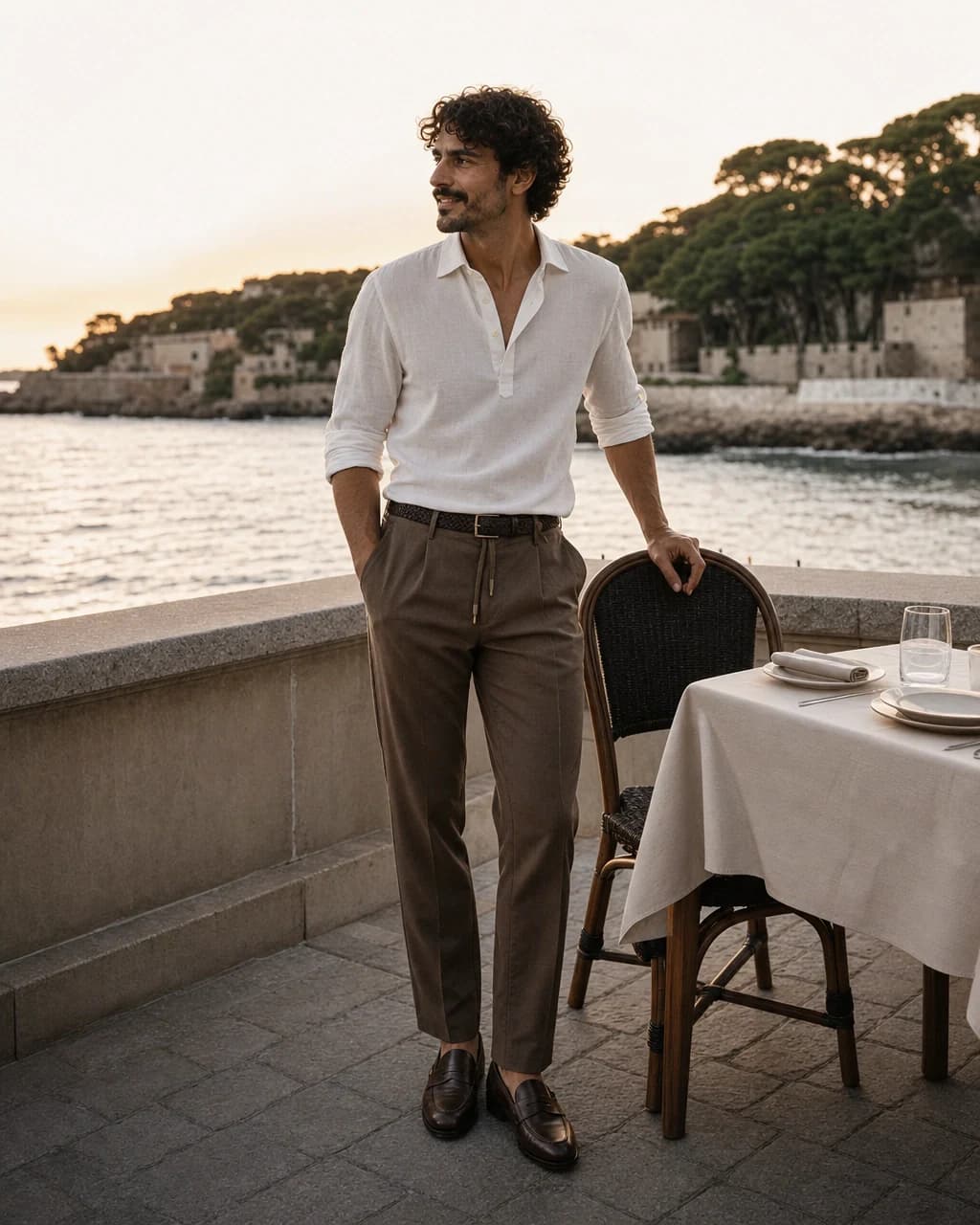
Why the suitcase grows
Overpacking usually begins with reasonable individual choices. A favourite shirt enters, then the trouser it requires, then a particular shoe. A second shirt promises a different mood but introduces another trouser. Soon the suitcase contains ten good garments and only three complete outfits. Each piece was selected on merit; almost none was selected for its relationship with the whole.
Travel exposes wardrobe incoherence because there is no second rail to rescue a failed combination. The answer is not severe minimalism. It is to plan from finished outfits backwards, giving every packed piece more than one credible role. A small bag then becomes a design constraint rather than a test of deprivation.
Start with the itinerary
List actual activities before touching the wardrobe: the flight, walking days, dinners, a meeting, the possibility of rain. Use real levels of formality rather than the heightened version imagined for travel. Many trips are spent in ordinary restaurants, museums and streets, not in the cinematic occasions for which speculative clothes are often packed.
Climate should be read as a sequence, not an average. Cool mornings, strong midday sun and an air-conditioned evening may all occur in one day. Layers that can be added and removed are more valuable than single garments designed for one temperature. The itinerary gives every item a job description.
Choose footwear early
Shoes consume space and control the silhouette, so choose them first or close to first. One comfortable pair should manage the longest walking day. A second may raise formality or handle weather. Both should work with every trouser packed. If a shoe supports only one outfit, that outfit must be important enough to justify the space.
This decision immediately clarifies colour and proportion. Brown loafers and clean trainers, for example, can share navy, cream and olive trousers while covering different settings. A delicate evening shoe and a heavy hiking boot may both be necessary, but they create two wardrobes inside the suitcase. Recognising that cost early prevents accidental expansion.
Build the small palette
Choose two foundation colours and one supporting colour from clothes already worn together. Travel is a poor moment to test an entirely new palette. Navy and cream with pale blue, or charcoal and olive with white, create enough variation while allowing outerwear and footwear to remain fixed.
Then choose versatile bottoms. Two trousers with different character but shared partners are usually stronger than four unrelated ones. Three tops should work with both, not merely in theory but in complete, tried-on outfits. Add one useful layer that can sit over every top and under any necessary coat.
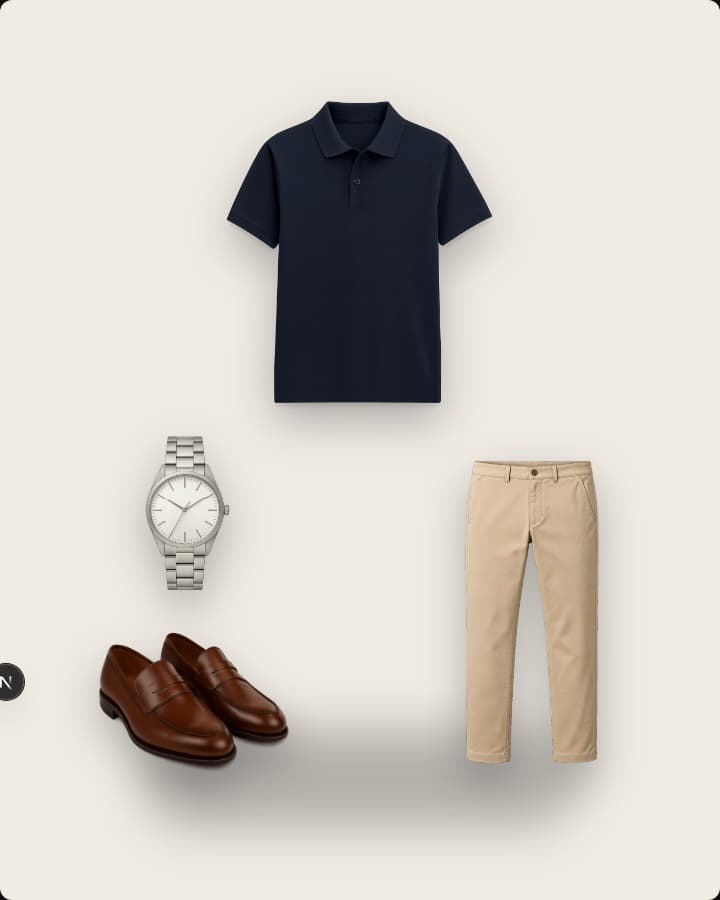
Outfit multiplication
Two trousers, three tops, one layer and two pairs of shoes contain more combinations than the numbers suggest. Before accessories, there are six base outfits. The layer changes each, and footwear shifts tone again. Not every mathematical combination will be equally good, but eight convincing looks from a compact set is entirely realistic.
The important word is convincing. Capsule arithmetic can become abstract, counting combinations nobody would actually wear. Try every proposed outfit before packing, including the coat and bag. Sit, walk and check the hems with both shoes. Photograph the results. A five-minute test at home removes uncertainty when the trip is underway.
“The smallest useful suitcase is not the one with the fewest items. It is the one with the fewest dead ends.”
Leave room for the place
A compact travel wardrobe should not erase pleasure. Include one garment that changes the register: a silk scarf, an open-weave knit, an evening shirt or a piece of jewellery. Because the foundations are coherent, a small expressive element has greater effect and does not need a supporting cast.
Packing around outfits also leaves physical and mental room for the destination. There is less maintenance, less negotiation and less fear that the correct piece was left at home. The clothes support the trip instead of becoming its parallel project. That is the most useful version of a capsule: temporary, specific and built around a life actually about to happen.
Accessories should follow the same logic. One belt, bag or scarf that works across the palette is usually more useful than several pieces assigned to single looks. Underwear and practical layers can be counted by laundry access rather than anxiety. This is where an honest itinerary is valuable again: a four-day city stay and a remote two-week journey require different kinds of redundancy.
On returning, note what remained unworn and why. Weather may have changed, but a repeated pattern is instructive. The third shoe, special top or backup jacket that travels repeatedly without leaving the case is making a clear argument. Future packing improves through this small record, until the method begins to feel less like planning and more like knowing.